


- Day 5 — This Is Where the Chart Starts Talking to You
- What Is an Order Block?
- The Bullish Order Block
- The Bearish Order Block
- What Makes an Order Block Valid? — Three Things to Check
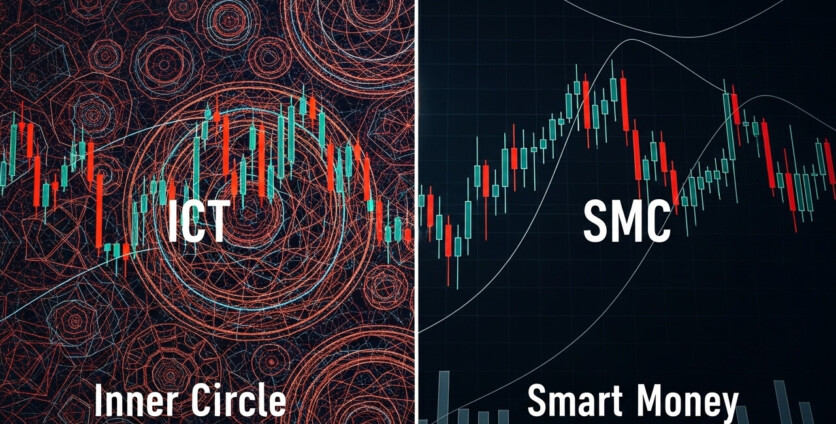
- The One Big Difference: How ICT and SMC Use Order Blocks Differently
- When an Order Block Fails — The Breaker Block
- Up Next — Day 6
Day 5 — This Is Where the Chart Starts Talking to You
Welcome back. Over the last four days we’ve built a serious foundation:
- You know what ICT and SMC are and where they came from
- You understand market structure — BOS, CHoCH, swing points
- You understand liquidity — why price hunts stop losses before moving
Today we put the first entry tool in your hands. The one concept that every ICT and SMC trader returns to again and again, on every timeframe, in every market.
Order Blocks.
Once you understand these, you’ll stop staring at candles wondering what they mean — and start reading them as institutional footprints.
What Is an Order Block?
An order block is a specific price zone on the chart where large institutions placed significant buy or sell orders just before a strong, impulsive market move. It is the last candle — or tight group of candles — before price accelerates sharply in one direction.
Why does it matter? Because institutions cannot execute a $500 million position in a single click. They accumulate gradually, building positions over a range of prices. That accumulation leaves a mark on the chart. When price returns to that zone later, those unfilled institutional orders are still there — waiting — and the market tends to react strongly when it taps back into them.
Think of an order block as an institutional bookmark. It marks where smart money was active, and it tells you where they’re likely to be active again.
The Bullish Order Block
A bullish order block forms during a downward move. Specifically, it is the last bearish candle before a strong bullish impulse — the final down candle before price launches upward aggressively.
The logic: institutions were quietly accumulating long positions during that final bearish candle. Retail traders were selling. Smart money was absorbing every one of those sell orders to build their long position. Then, once enough orders were filled, price exploded upward.
When price retraces back into that zone later, those same institutional buy orders are still resting there — creating a support level grounded in actual order flow, not just a drawn line on a chart.
How to draw it: Mark the zone from the low to the high of that last bearish candle before the bullish impulse. Your entry is on the retest of this zone. Your stop loss goes below the low of the order block — if price closes below it, the institutional logic is invalidated.
The Bearish Order Block
A bearish order block is the mirror. It is the last bullish candle before a strong bearish impulse — the final up candle before price drops sharply.
Institutions were building short positions during that final bullish candle while retail traders were buying in excitement. Once enough sell orders were accumulated, price collapsed. When price retraces back up into that zone, it acts as resistance — the ceiling where institutional selling resumes.
How to draw it: Mark the zone from the low to the high of that last bullish candle before the bearish impulse. Entry is on the retest. Stop goes above the high of the order block.

Alt text: Side-by-side diagram showing a bullish order block on the left — the last bearish candle before an upward impulse, with a retracement entry zone and stop below — and a bearish order block on the right — the last bullish candle before a downward impulse, with retracement entry and stop above.
What Makes an Order Block Valid? — Three Things to Check
Not every candle before a move qualifies as a tradeable order block. Here is what separates a strong one from a weak one:
1. A clear impulse must follow it. If the move away from the candle is weak or gradual, it wasn’t institutional. A valid OB is preceded by a sharp, energetic displacement — a candle or series of candles that moves fast and decisively.
2. It should be accompanied by a Fair Value Gap. When institutional order flow is genuine, it moves price so quickly it leaves an imbalance — a gap on the chart where not all orders were filled. An OB with an FVG sitting next to it carries far more weight than one that doesn’t. We’ll cover FVGs fully in Day 6.
3. It must align with higher timeframe structure. A bullish OB is only worth trading when the higher timeframe bias is bullish. Trading a bullish OB in a confirmed bearish trend is one of the most common and costly mistakes beginners make.
The One Big Difference: How ICT and SMC Use Order Blocks Differently
Both frameworks identify order blocks in the same way. The critical difference comes in when they trade them.
SMC traders will set a limit order at an order block zone at any time of day, as long as the structure aligns.
ICT traders add a third dimension: time. An order block retesting at 8:30am EST during the New York Kill Zone is a high-probability setup. That same order block retesting at 1:00pm EST during the dead mid-session is likely a trap. ICT treats the when as seriously as the where.
This is one of the most practical distinctions in the entire ICT vs SMC debate — and it’s a major reason why many advanced traders combine both: SMC for structure and zone identification, ICT for timing the entry.
When an Order Block Fails — The Breaker Block
No setup works every time, and order blocks are no exception. When price doesn’t respect an OB and breaks through it instead, that failed order block becomes what ICT calls a breaker block — it flips polarity and starts working from the opposite side. A failed bullish OB becomes resistance. A failed bearish OB becomes support.
Knowing this protects you from holding a losing position hoping an OB will eventually hold. When it’s broken with conviction, it’s no longer an OB — it’s a breaker — and you adjust accordingly.
Up Next — Day 6
Now that you can identify where institutions entered the market, tomorrow we cover the concept that almost always sits right next to a good order block — the one that tells you how fast institutions were moving and where price needs to return to restore balance.
Day 6 is all about Fair Value Gaps — possibly the most searched SMC concept on the internet right now.
→ See you on Day 6.